South Africa has a diverse production base, established commercial infrastructure and access to international shipping routes. These strengths create opportunities for local businesses to supply products to customers across Africa, Europe, the Middle East, Asia and other global markets.
Export success, however, depends on more than having a suitable product. Businesses must understand the destination market, meet buyer requirements and coordinate pricing, documentation and logistics effectively.
A structured export strategy helps companies focus on markets where their products can compete and where long-term demand can be developed.
Identify products with export potential
A product may have export potential when it combines reliable supply, consistent quality and a clear reason for international buyers to consider it.
South African opportunities extend across categories such as:
- Processed and speciality foods
- Fresh and agricultural products
- Hospitality supplies
- Industrial products and components
- Minerals and manufactured materials
- Medical and institutional supplies
- Consumer and lifestyle products
Businesses should evaluate whether production capacity can support recurring orders and whether quality can remain consistent as volumes increase.
Packaging, shelf life and transport requirements must also be considered. A product that performs well locally may require different preparation for longer international journeys.

Select markets carefully
Not every market will be equally suitable. Exporters should assess demand, competition, pricing and regulatory requirements before committing resources.
Market selection may consider:
- Customer demand
- Existing competing products
- Import duties and taxes
- Product and labelling regulations
- Transport cost and transit time
- Currency and payment risk
- Available distributors or commercial partners
- Cultural and purchasing preferences
A focused approach is often more effective than pursuing several unrelated markets at once. Businesses can begin with a small number of suitable destinations and expand as knowledge and customer relationships develop.
“Export opportunity becomes sustainable when a competitive product is supported by reliable supply, market knowledge and disciplined delivery.”
Understand buyer and regulatory requirements
International buyers may require products to meet specifications that differ from those used in South Africa. These can relate to ingredients, materials, dimensions, packaging, labelling or supporting documentation.
Exporters should confirm requirements before production begins. Late changes may lead to repacking, delays or rejected goods.
Depending on the product and destination, documentation may include:
- Commercial invoices
- Packing lists
- Transport documents
- Certificates of origin
- Health or inspection certificates
- Product specifications
- Import permits
- Compliance documents
Requirements should be verified for every destination and product category. A process that works for one market may not apply to another.
Develop accurate export pricing
Export pricing must account for more than production cost. The final commercial offer may include packaging, inland transport, freight, insurance, customs charges and distributor margins.
Businesses should establish which costs are included and which will be paid by the buyer. The agreed Incoterm should reflect these responsibilities clearly.
Currency movements can affect profitability between quotation and payment. Exporters should therefore define quotation validity, payment terms and the currency in which the transaction will be settled.
A competitive price must still provide enough margin to support quality, administration and reliable fulfilment.
Prepare products for international transport
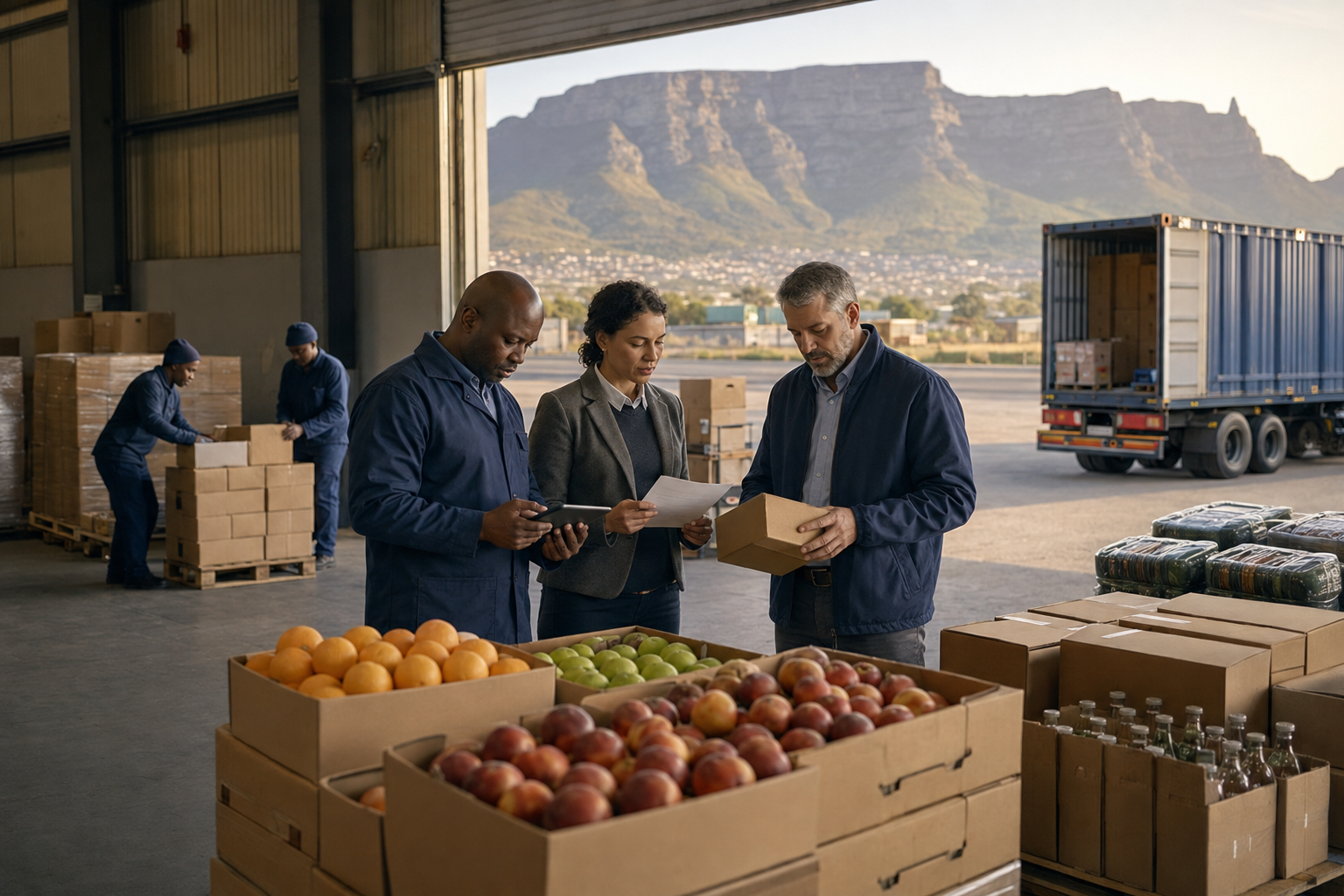
Export packaging must protect products through handling, storage and transport. Goods may pass through several warehouses, vehicles and ports before reaching the customer.
Packaging should be appropriate for the product, transport method and destination climate. Labels and outer cartons should provide the information required for identification and receiving.
For food and other time-sensitive products, shelf life and temperature requirements are central to the logistics plan. Industrial or fragile products may need reinforced packaging and clear handling instructions.
Choose suitable routes and partners
Reliable logistics partners help exporters coordinate collection, freight, customs processing and final delivery.
The chosen transport method should balance cost, urgency and product requirements. Sea freight may be suitable for planned larger volumes, while air freight may support smaller or urgent shipments.
Exporters should understand total transit time rather than relying only on the port-to-port schedule. Time must also be allowed for collection, consolidation, export procedures, customs clearance and inland delivery.
Alternative routes should be considered where disruption could significantly affect the customer.
Build dependable buyer relationships
Export growth is strengthened by consistent service. International customers need confidence that the exporter will communicate clearly, maintain quality and deliver according to agreed terms.
Smaller initial orders can provide an opportunity for both parties to test the commercial relationship. Successful delivery creates a foundation for repeat orders and larger commitments.
After each shipment, exporters should review customer feedback, delivery performance and actual costs. These lessons can improve future pricing and planning.
Expanding South African products into global markets
South Africa’s export opportunity is supported by the quality and variety of products available across the country. Turning that opportunity into long-term business requires disciplined market selection, compliance and supply coordination.
GANS South Africa connects locally sourced products with international customers through product sourcing, commercial coordination and export support. Working from defined buyer requirements, GANS can assist with supplier communication, documentation and delivery planning.
By combining South African supply capability with a structured international approach, businesses can pursue new markets while building the reliability required for sustainable export growth.